


OCTOBER 05, 2026
Apartment Insurance in Moldova: Why It Matters Even Outside an Earthquake Zone
Most apartment damage comes from neighbours and burst pipes, not earthquakes. Find out what risks home insurance may cover and what to check before taking out an insurance policy.

The most common damage in an apartment block doesn't come from earthquakes — it comes from flooding caused by neighbours, plumbing failures and local fires. Home insurance from General Asigurări covers the structure, utilities, furniture and electronics in your apartment — cover is set item by item, for your specific situation.
Why you need cover in an apartment block
Many people think home insurance is only necessary for houses on the ground or in earthquake-prone areas. In reality, an apartment is just as vulnerable — to a different set of risks. Major damage that ruins an apartment and the belongings inside it usually comes from plumbing failures, local fires or unexpected actions by neighbours, not earthquakes.
What you can insure in an apartment
- the structure (walls, floor, ceiling, fixed elements);
- utilities and fittings (electrical, plumbing, heating);
- furniture and movable belongings;
- electronic equipment.
Attention: Every item is listed in the contract, depending on what's actually in your apartment and which risks you want covered — it's not a blanket policy signed blind. You can also insure only part of your belongings rather than the whole apartment: for example, just the finishes and appliances, if that matters most to you.
What risks the policy covers
The main risks: fire or explosion, lightning strike, earthquake, vandalism, burglary and water leaks from pipes, systems or tanks. Depending on the contract, other risks can be added: riots and protests, impact from vehicles or aircraft, falling objects (trees, branches, antennas), action by animals, storms and heavy rain. The exact set of risks and compensation limits are fixed when you take out the policy — see the home insurance page for details.
What the policy doesn't cover, and other conditions worth knowing
As with any property insurance, there are limits. The policy doesn't cover: property not listed in the contract, or property whose value and ownership can't be proven; carpets and other loose floor coverings; above-ground pools, plants and trees; jewellery beyond the limits set in the policy, unprocessed precious stones, cash and securities, vehicles; property that was already damaged before the policy started, property intended for demolition, or property with wear exceeding 60%; property used to generate profit as part of a commercial activity.
For earthquake risk, a minimum unconditional deductible applies, set separately by the insurer; for other risks, the deductible is the one stated in the policy. A practical detail worth remembering: if the apartment stays unoccupied for more than 30 consecutive days without the insurer's prior consent, cover is limited to the risks explicitly allowed by the contract — useful to know if you're away on a long holiday or working abroad for a while.
The insured sum is set separately for the "Home" and "Household goods" sections, based on the real value of your belongings. Compensation can't exceed that sum — if the real value at the time of the claim is higher, compensation is calculated proportionally.
Water from neighbours and fires: the real risks of block living
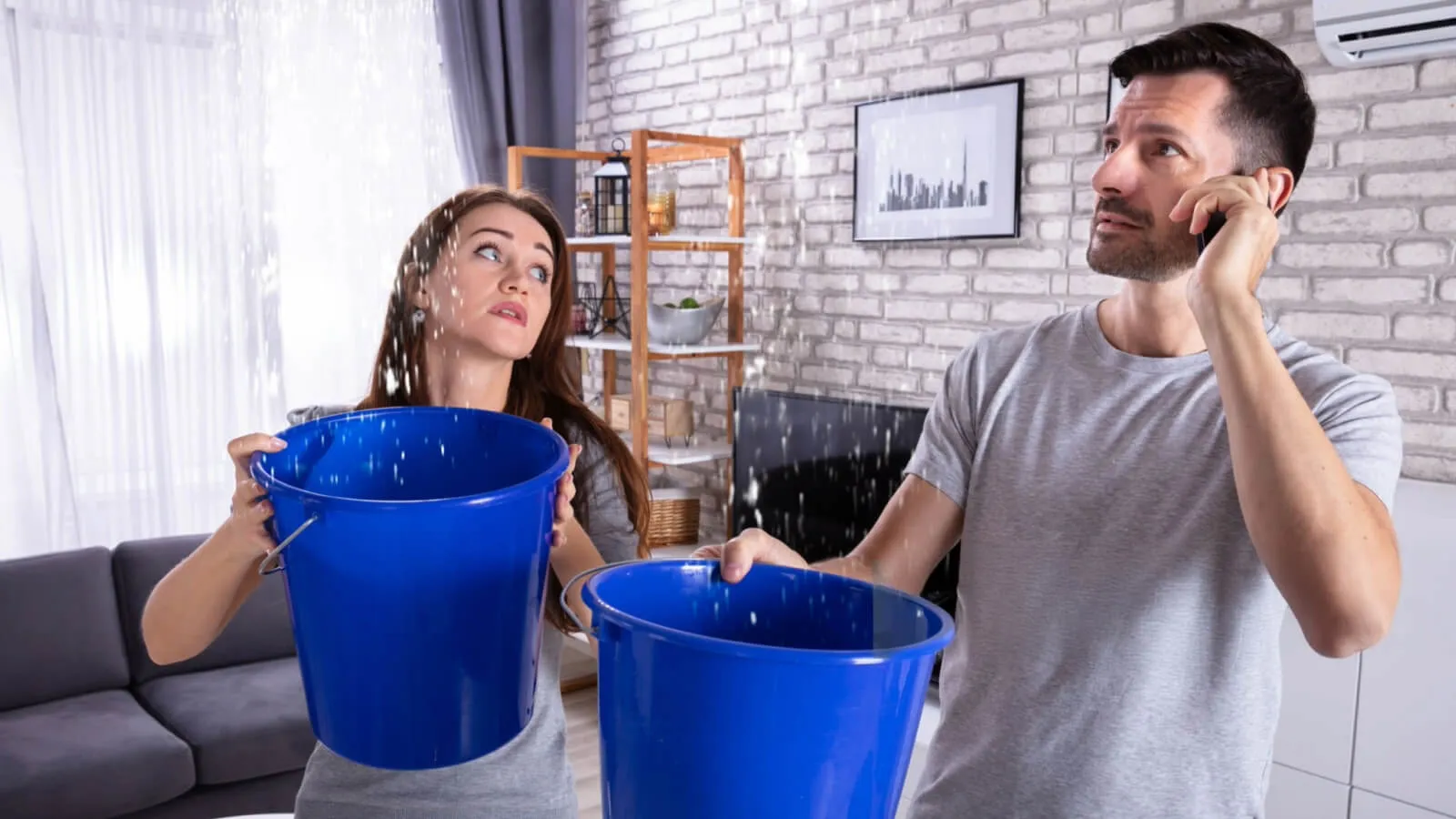
On an upper floor it's easy to feel protected from the elements. But an apartment's vulnerability is simply different from a house on the ground — not smaller.
Water from the neighbours upstairs is enemy number one. A burst pipe on the floor above can completely flood your apartment while you're at work. The policy covers both repairing the damaged utilities and restoring the affected finishes and furniture.
Fires in an apartment block spread fast. The source can be in your own apartment or a neighbour's — smoke and heat damage can be serious even if the flames never reach you directly.
What to know about the policy term
A home insurance contract usually runs for 12 months, with the option to renew. Keep track of the expiry date — if the premium or an instalment isn't paid on time, cover can be suspended or terminated under the contract terms.
Frequently asked questions
1. Is apartment insurance mandatory in a block of flats?
No, it's voluntary. But given how often household accidents happen (leaks, short circuits, fires), it remains a practical way to protect your budget.
2. Does the policy cover damage caused by neighbours, if they're at fault?
Yes — if flooding or other damage is caused by your neighbours' fault, your home insurance policy covers restoring your apartment and belongings, regardless of whether you separately recover anything from the person at fault.
3. What should I do if my insured home or belongings are damaged?
Take steps to protect the insured property and mitigate the loss, then notify the insurer and the competent authorities immediately, within the time limits set out in the insurance contract. Preserve the damaged property until it has been inspected, allow the damage to be assessed, and provide the requested documents relating to the incident and the loss.
4. Can I insure only specific items rather than the whole apartment?
Yes, the set of insured items and risks is set individually in the contract — you can limit it, for example, to just the finishes and appliances.
Take care of protection in advance
An accident at the neighbours', a short circuit or a burst pipe rarely happens "when it's convenient" — and redoing finishes and replacing furniture costs noticeably more than the policy premium. It's more rational to arrange protection in advance, not after the damage is done.
Buy home insurance online or request a consultation to choose the right cover for your apartment — the General Asigurări team can help you sort out the details.

Recent articles
Similar articles
OCTOBER 01, 2026
Types of Insurance in Moldova: What Is Mandatory and What You Actually Need
See which types of insurance exist in Moldova and which one fits you: compulsory and voluntary, for cars, travel, health, home and business.

OCTOBER 22, 2026
Documents You Need for CASCO: From the Quote to the Claim File
What data and documents to prepare for a CASCO quote, what happens when you sign the contract, and what to keep for a claim file.

OCTOBER 19, 2026
What Is the Green Card and When You Need It
The Green Card is compulsory external motor liability insurance for driving abroad. See what it covers, how the system works and who needs it.